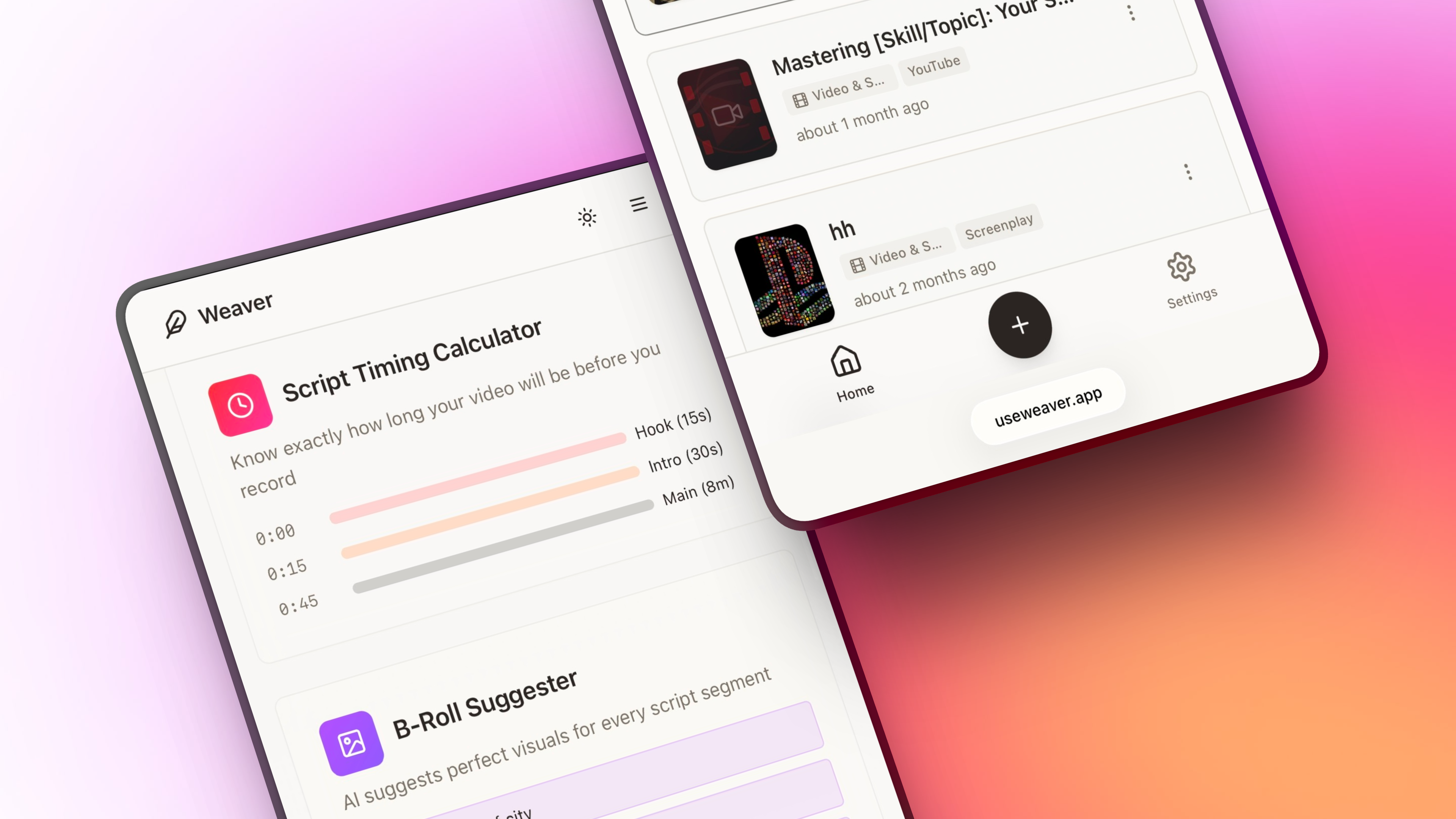

Weaver
A visual canvas for mapping and developing complex narratives before you write them.

Writers — whether working on novels, screenplays, non-fiction, or video scripts — routinely hit a cognitive wall where the complexity of their story world exceeds what they can hold in their head at once. Character relationships, plot threads, timelines, themes, and world-building details all compete for mental space, leading to inconsistencies, writer's block, and the kind of structural problems that only reveal themselves 80,000 words in. Most tools in this space either force writers into rigid outlines (acts, chapters, scenes in a hierarchy) or dump everything into flat documents and spreadsheets. Neither matches how story thinking actually works.
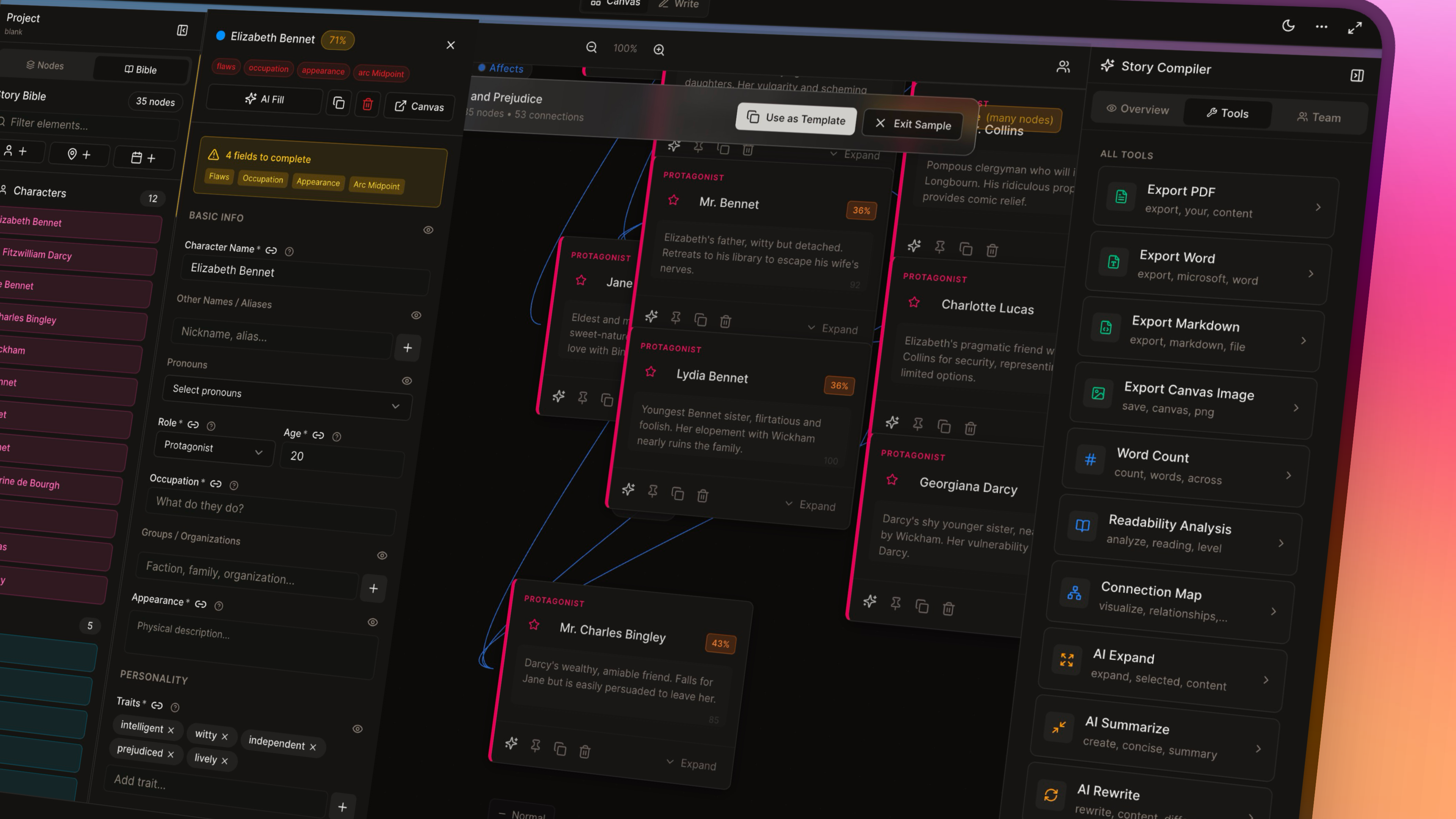
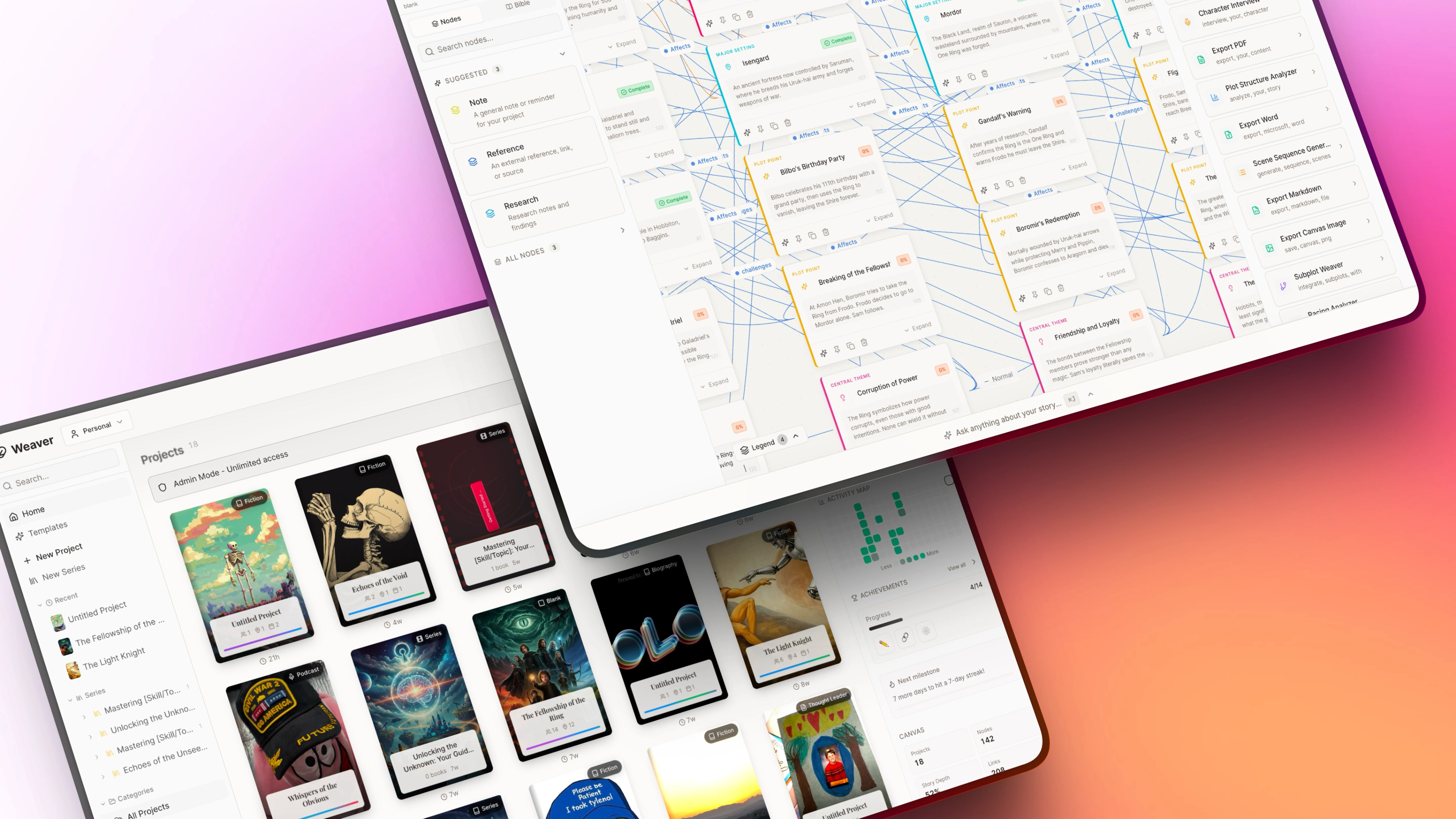
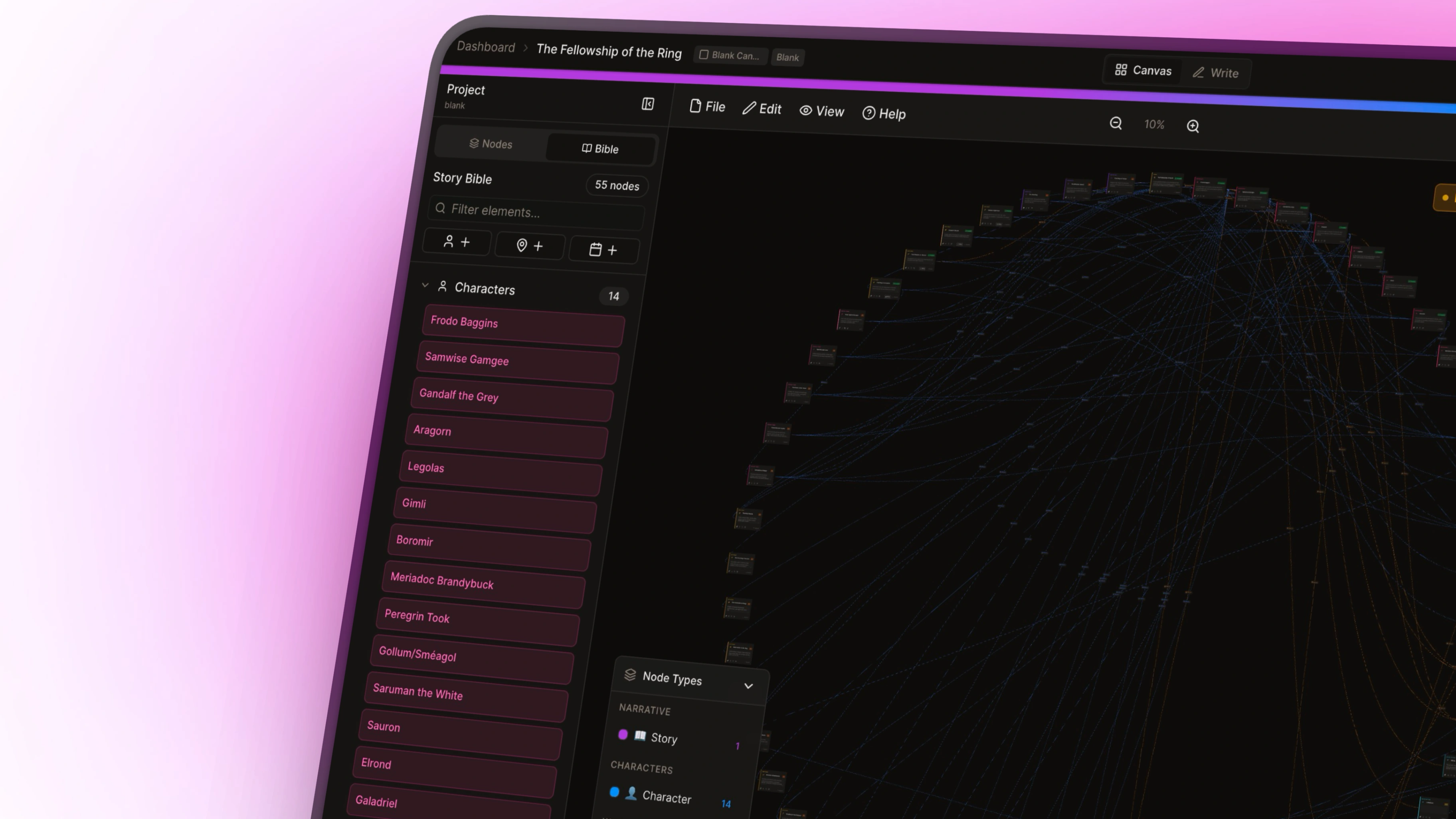
Weaver approaches this differently by treating story development as a spatial, relational problem rather than a linear one. The core is a visual canvas where writers can externalize everything — characters, events, locations, themes, plot threads — as nodes, and draw explicit connections between them. The act of placing things in space and linking them forces clarity. You can't draw a line between a character and a plot event without deciding what that relationship actually is. This spatial externalization reduces cognitive load by making the structure of your story visible rather than implicit, letting you see the whole at once and navigate it freely.
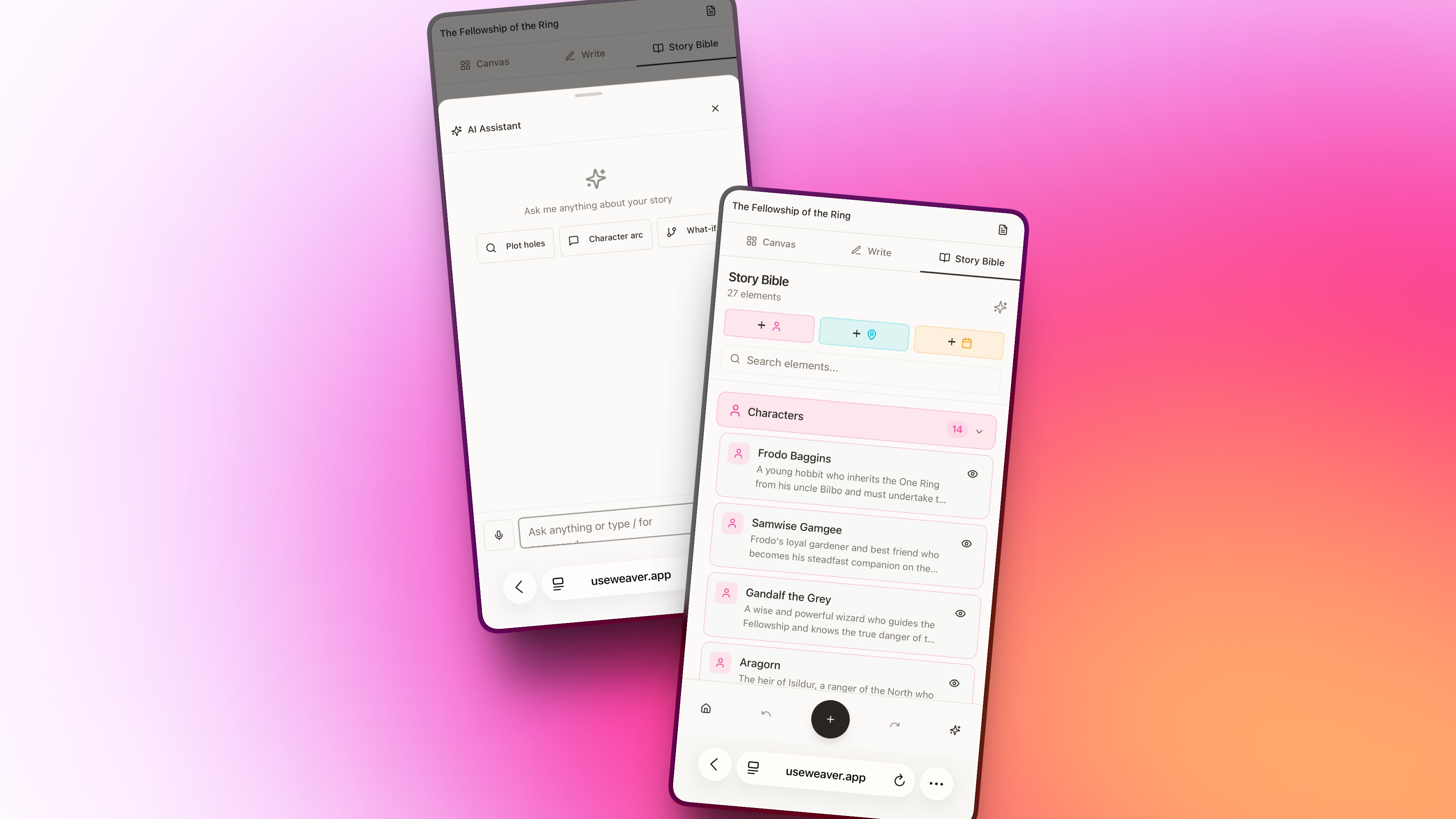
The product is built in React and designed around the idea that the canvas should feel as fluid as a whiteboard — fast, zoomable, and low-friction to edit. The target isn't just novelists; Weaver explicitly supports fiction writers, non-fiction writers, and video creators, which reflects a recognition that narrative complexity isn't genre-specific. A documentary filmmaker mapping interview subjects and thematic arcs has the same structural problem as a fantasy novelist tracking a cast of twenty characters across three timelines.
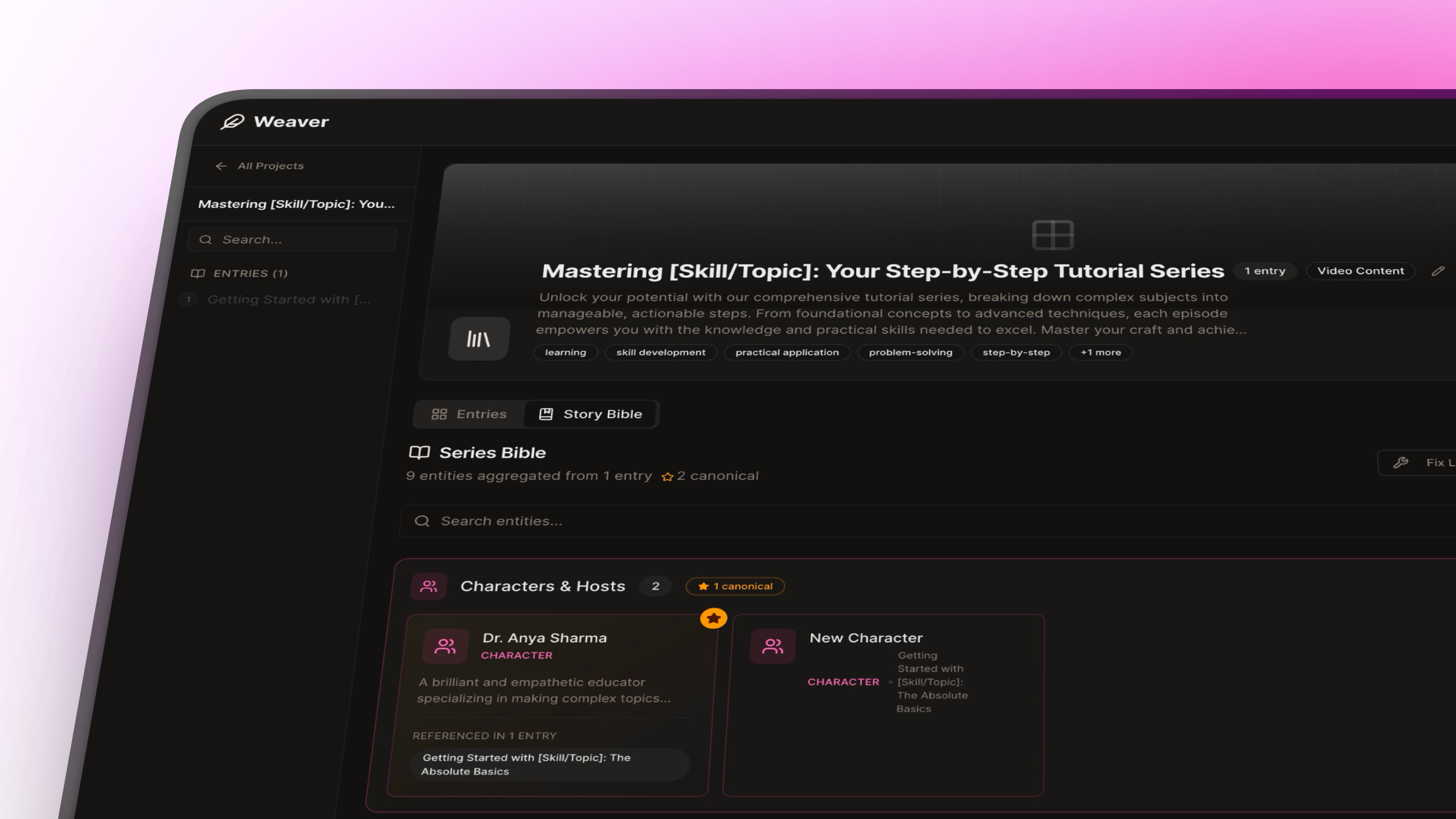
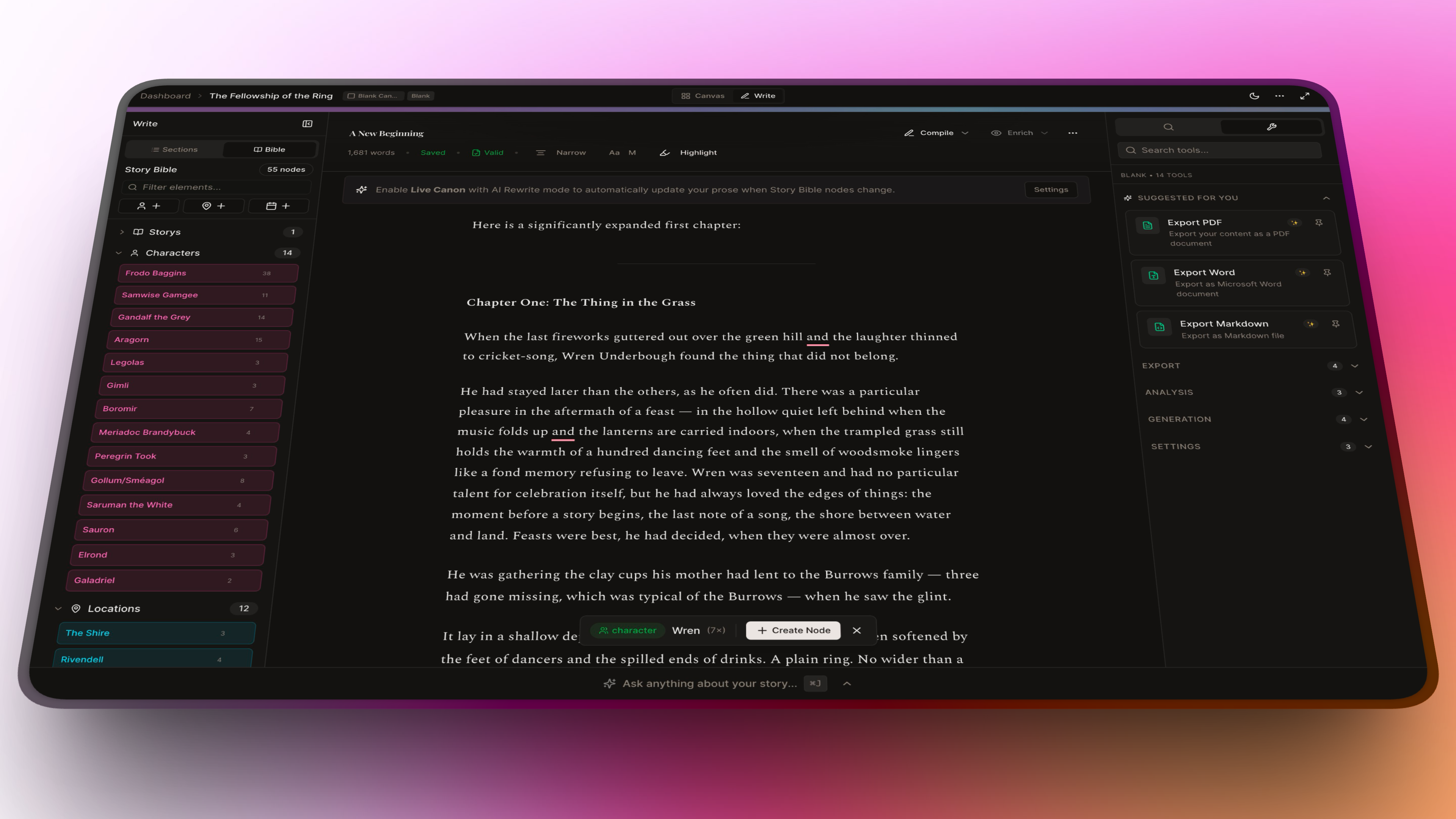
What differentiates Weaver from general-purpose tools like Miro or FigJam is that it's built with the specific mental model of story development in mind — the node types, the relationship vocabulary, and the overall workflow are shaped around narrative problems rather than business diagramming. And compared to dedicated writing software like Scrivener or Notion-based setups, it prioritizes visual spatial thinking over document management, filling a genuine gap for writers who need to think before they write.

More from the work